The Trade Counter Is Still the Killer App: How Independent Builders’ Merchants Became Local B2B Networks
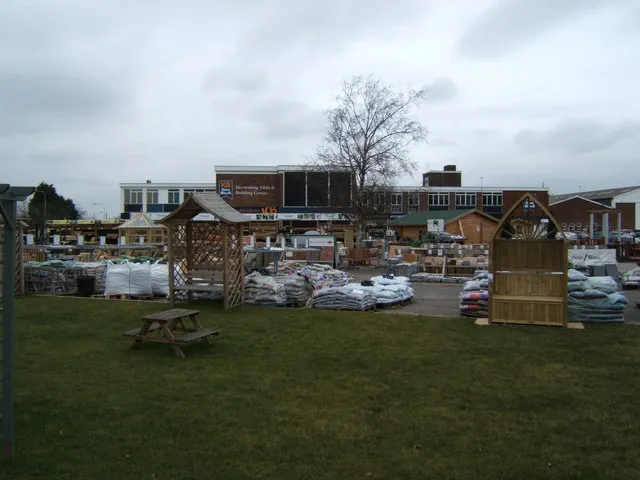
Photo: Glyn Baker, CC BY-SA 2.0, via Wikimedia Commons
Builders' merchants are not supposed to be interesting. They are yards, counters, stacks of timber and a van that turns up before eight. Yet some of the most interesting B2B commerce in Britain is happening behind those counters. Independent merchants are turning old-fashioned trade desks into digital ordering hubs, credit platforms and local logistics networks — not because they want to be tech companies, but because they want to keep the account.
The counter was never just a counter
The trade counter has always been a strange kind of marketplace. A builder does not only buy screws and plasterboard; they buy certainty. They buy the knowledge that the merchant has the right lintel in stock, that the account terms will hold until the end of the month and that a replacement can be sent to site before the crew down tools. The counter was where those promises were made and repaired.
Online rivals have spent years trying to replicate that. They can list more stock, undercut on price and deliver next day. What they struggle to copy is the local judgement: the branch manager who knows which roofer needs a pallet at 7am, the credit controller who understands a builder's cash flow, the yard team that can find one odd-sized sheet when the computer says zero.
The app is now part of the yard
The change in 2026 is that the counter and the app are no longer separate channels. Independent merchants are putting trade accounts online, showing live branch stock, allowing repeat orders from a phone and offering click-and-collect or same-day van drops. The good ones are not trying to become a national catalogue. They are building a local ordering layer on top of an existing relationship.
That distinction matters. A pure marketplace wants to own the customer and take a cut. A merchant marketplace wants to protect the account and sell more of the range. Some independents are now aggregating complementary local suppliers — a specialist tooling firm, a fencing supplier, a hire desk — so their trade customers can solve more of a day's problems in one place. The merchant becomes a curator of local availability rather than a warehouse with a website.
Credit is the quiet platform
Ask a builder why they still use the same merchant and the answer is rarely price. It is the account. Trade credit is the invisible product behind the counter: 30-day terms, monthly invoicing, a credit limit that can flex when a job runs late. Online challengers can offer card payments and instant checkout, but they cannot easily replicate the trust that lets a merchant carry a small builder through a tight month.
The smarter independents have turned credit into a service rather than an administrative burden. They use digital account portals to show balances, invoices and statements; they automate credit checks without removing the branch manager's judgement; they offer staged limits for newer firms. Some are partnering with fintech providers to give customers faster decisions or flexible payment options. The risk is obvious — credit losses can wipe out margin — but the opportunity is that credit remains a moat that a pure-play website cannot easily cross.
Same-day is a logistics promise, not a slogan
The most overused phrase in B2B retail is same-day delivery. In builders' merchanting, it means something specific: the right product, on site, before the next trade starts. That is a logistics problem, not a marketing one. It depends on route density, van capacity, yard picking accuracy and a delivery team that knows the difference between a site entrance and a locked gate.
Independent merchants have an advantage here because they are close to the job. A branch can hold a small buffer of fast-moving lines, run a mid-morning van and respond to a missed item without sending a full lorry across the county. The digital layer makes that promise visible: a builder can see stock at their local branch, place an order before 7am and get a realistic delivery window rather than a generic next-day label. Reliability is the product. Price is a tie-breaker.
The margin defence is usefulness
The obvious fear is that online rivals will squeeze independent merchants on price. That fear is real on commodity lines, where a website with a national warehouse can undercut a local yard. But many trade purchases are not commodity decisions. They are problem-solving decisions made under time pressure. A merchant that can advise on a building regulation, source a discontinued part or hold an account together through a cash-flow crunch is selling something more valuable than a discount.
That is where the B2B marketplace angle becomes useful. The independent merchant is not trying to win every SKU. It is trying to be the most useful local node in a builder's day: the place where the account, the stock, the credit and the van all connect. The margin comes from bundling reliability with range, not from pretending to be the cheapest.
The risks of becoming a software business by accident
The danger for independents is overreach. A merchant that bolts on a marketplace without fixing stock accuracy, delivery reliability or staff training will simply make its problems digital. Credit fraud, cybersecurity and data quality are now real operational risks for small distributors. So is the temptation to chase online sales that carry no account relationship and little margin.
The successful model looks more like a network than a website. The branch remains the hub; the app is the front door; the van is the fulfilment; the account is the lock-in. Staff need to be trained to work across all four, not treated as a counter team with a tablet bolted on. Suppliers need clear rules on range, pricing and returns. Customers need a reason to order through the merchant rather than around it.
A local network, not a national catalogue
Britain's independent builders' merchants are not going to out-Amazon Amazon. They do not need to. The trade counter renaissance is really a rediscovery of what a distributor is for: holding local stock, extending trust, moving goods quickly and knowing the customer's job. In 2026, the merchants making progress are the ones using digital tools to make that local advantage easier to use — not the ones trying to become a generic marketplace with a yard attached.
The counter is still the killer app. It has just gained a login.