The Screwdriver Margin: Why Britain's Repair Trade Is Quietly Becoming a Real Business
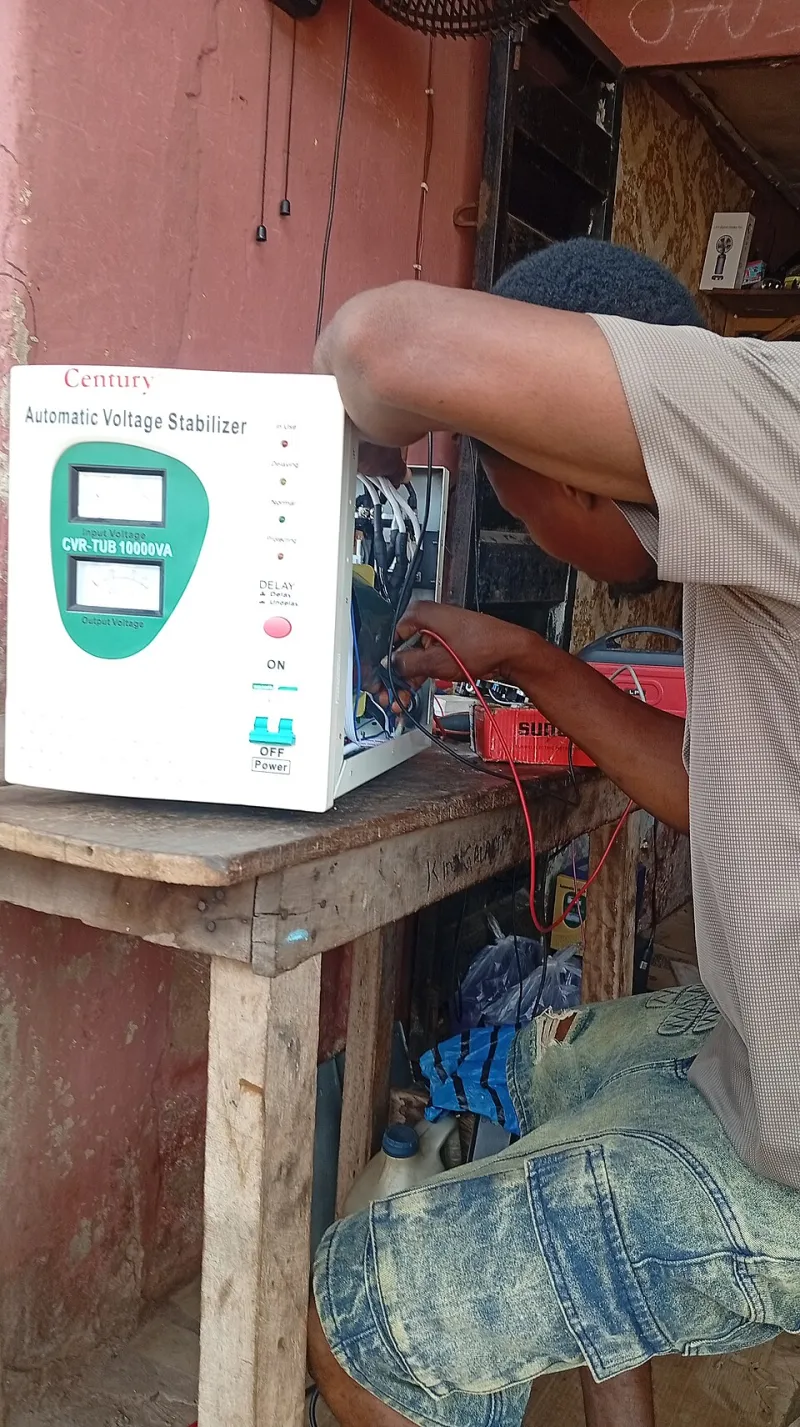
Photo: Bigcee007, CC BY-SA 4.0, via Wikimedia Commons
Britain has a soft spot for repair. There's a Repair Café in most medium-sized towns, a bloke on the industrial estate who can bring a twenty-year-old washing machine back from the dead, and a growing national twinge of guilt every time something gets skipped. None of that goodwill, unfortunately, converts automatically into a profit and loss account a founder can live on.
The interesting story in 2026 isn't that mending things is virtuous. It's that a cohort of operators has worked out how to make the virtuous bit pay — and in the process, has quietly turned a hobbyist's pastime into a trade with margins, contracts and, yes, franchise agreements.
Sentiment gets them in the door. Sentiment doesn't pay the van.
Talk to anyone running a repair outfit and the same arithmetic comes up. A domestic call-out is often a two-visit job: one to diagnose, one to fit the part. Travel is unpaid, parking is a tax on optimism, and the customer has already spent twenty minutes on Google deciding whether you're a cowboy. A typical ticket — call-out plus a part with a sensible mark-up — lands somewhere between £60 and £140 depending on the appliance and the postcode.
Roughly two-thirds of that is labour and getting to the labour. The swing factor is parts: whether the manufacturer's supply chain will hand you a door seal in three days or three weeks. Since the ecodesign rules that came in during 2021, manufacturers have been obliged to make spares available for a set number of years on many appliance categories, which helps on paper. It helps less when the part exists but the distributor's lead time quietly stretches into a fortnight and your customer has already bought a replacement.
That's the whole business in miniature: a good story on the outside, a supply chain problem on the inside.
Three trades wearing the same coat
"Repair" is a handy label that hides at least three very different businesses.
Domestic appliance fixing is high-volume, thin-margin and hostage to parts. It works on density — enough jobs in enough postcodes that a technician's day is full without motorway miles. It rarely works as a lifestyle business with one van.
Electronics refurbishment is a stock business dressed as a service business. You buy broken things, grade them, wipe the data, warranty them, and sell them on marketplaces or to trade buyers. It ties up working capital, punishes anyone who overpays for a job lot, and rewards people who are genuinely good at triage. It also comes with real compliance tail — WEEE obligations, data destruction that has to be demonstrable rather than merely claimed, and consumer law that treats a refurbished laptop much like a new one.
B2B maintenance is the least glamorous and by far the most bankable. Landlords need gas safety certificates and electrical checks. Offices need printers, coffee machines and air conditioning that behave. Commercial kitchens need refrigeration that doesn't fail on a Friday night. These are contracts, not one-off jobs: recurring revenue, scheduled visits, far less price-sensitivity, and a customer who cares about downtime rather than the sticker price.
If you're a founder sizing the market, that third column is where the durable money is. Consumer repair is a lead-generation game. B2B maintenance is a retention game.
Franchising is really a way of buying trust
Several national appliance-repair networks have grown by franchising territories rather than hiring technicians directly, and the logic is easy to follow. The franchisor monetises three things a solo operator can't easily build: a booking engine that produces jobs in January as well as July, buying power on parts, and a brand a panicked householder recognises at 8pm on a Sunday.
The franchisee buys a route to work and a livery. The catch is that the brand's reputation is only ever as good as its worst operator, and franchisee economics get ugly in the shoulder months if the lead flow isn't genuinely there. Ask for territory-level job volumes, not national averages.
The trust problem no logo can solve
Consumer repair has a credibility problem that predates the sustainability movement: no-shows, unilateral diagnosis fees, the phrase "we'll need to order the part" followed by silence. A few practical fixes are spreading — a fixed diagnostic fee credited against the repair if you go ahead, photo evidence of the fault, two-hour arrival windows rather than a whole day, and a promise to refund the diagnostic if the part can't be sourced.
Reviews are the real KPI here, and they're unforgiving. A repair business with 4.8 stars and 400 reviews is worth roughly ten times one with 4.1 and fifty, because the customer's decision happens in about ninety seconds on a phone.
What legislation will and won't do
Westminster has moved more slowly than Brussels on right-to-repair. The spare-parts rules have helped, and there's been plenty of consultation about going further, but anyone building a five-year plan on the assumption that a sweeping new law lands on a specific date is taking a bet on parliamentary time rather than on customer behaviour.
The more reliable driver is price. When a new washer costs £400 and a repair costs £130, repair wins. When the gap narrows, it doesn't — which is why the smart operators skew towards higher-value appliances, older buildings with awkward installations, and the B2B side where the alternative to fixing isn't buying new, it's a tenant complaint.
A founder's checklist
- Pick a trade where the alternative to repair is genuinely expensive, not merely inconvenient.
- Make the maintenance contract the spine of the business and treat consumer jobs as the marketing.
- Sell certainty — arrival times, fixed fees, guarantees — rather than spanners.
- Stress-test parts supply before you hire the second technician.
- Don't try to scale a van fleet on paid search alone. Density is the whole game.
Repair in Britain is a service business with a sustainability side effect, not a sustainability business with a service side effect. The operators who have worked that out are the ones quietly making money while everyone else congratulates them for being green.