The Traceability Trade: How Small UK Calibration Labs Turn Precision Into Recurring Revenue
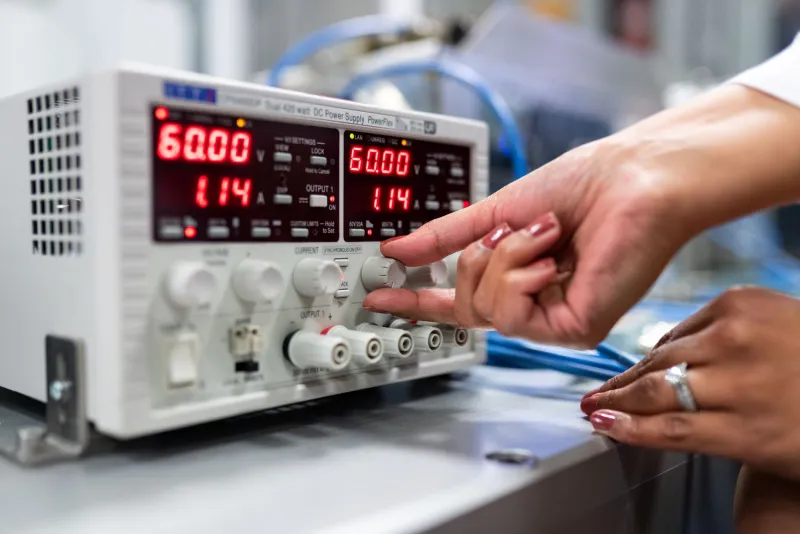
There is a particular kind of calm inside a calibration lab. It smells faintly of isopropyl alcohol and warm electronics. Someone is adjusting a dial with the concentration of a watchmaker, while a spreadsheet waits patiently on a nearby screen. It is not glamorous work. But without it, a lot of British industry would be guessing.
Calibration labs are the unglamorous referees of the measurement world. They check that the gauge on a factory floor, the thermometer in a hospital fridge, the pressure sensor on a production line and the scale in a bakery are telling the truth. Then they issue a certificate to prove it. The certificate matters because, in regulated industries, “it felt about right” is not an acceptable quality system.
What makes these firms interesting is not the science alone. It is the business model hiding underneath it. Calibration is rarely a one-off purchase. Instruments drift, regulations tighten and audit dates come round again. That creates a repeat cycle that looks suspiciously like a subscription — just with more torque wrenches and fewer app notifications.
The quiet subscription hiding in plain sight
Most calibration work is scheduled months in advance. A lab might hold thousands of instruments on its books, each with its own recalibration date, certificate history and tolerance range. Customers are not simply buying a measurement. They are buying continuity: someone else remembering what needs checking, when, and to what standard.
That rhythm gives small labs a resilient revenue base. It is not immune to economic weather — factories do delay non-urgent work when order books soften — but it is steadier than project work. A calibration lab with a healthy book of recurring customers has something many B2B firms envy: a reason to call clients every year without sounding desperate.
The best operators are careful not to treat this as a licence to coast. They use the repeat visit as a relationship. A technician who notices the same instrument coming back with the same drift problem is not just filling in a form. They are gathering intelligence. That information can be worth more than the calibration fee itself, because it helps the customer fix a process rather than just certify a symptom.
Accreditation is the moat, but trust is the product
In the UK, UKAS accreditation is the badge that opens doors. It signals that a lab has been assessed against recognised standards and can produce traceable results. For customers selling into regulated markets, that is often non-negotiable. It is the difference between a certificate that satisfies an auditor and one that starts a longer conversation.
But accreditation alone does not win work. Plenty of labs can tick the box. The ones that build a real business tend to compete on something softer: responsiveness, clarity and the ability to explain what a result actually means. A factory manager does not want a lecture on uncertainty budgets. They want to know whether the gauge is fit for purpose, what happens if it is not, and how quickly a replacement can be sorted.
The trust element is especially important because calibration is a grudge purchase for many customers. It is a cost that prevents a bigger cost. Nobody wakes up excited about sending a torque wrench away for checking. The lab that makes the process painless — clear collection, sensible turnaround, plain-English certificates — earns the next booking almost by default.
Pricing precision when the customer cannot see the work
Pricing calibration is a fiddly business. Two instruments that look similar can require very different amounts of time depending on range, tolerance and the condition they arrive in. A lab cannot simply quote a flat fee and hope for the best. But customers also dislike open-ended bills.
Many small UK labs solve this with tiered pricing: a standard rate for routine checks, a premium for tight tolerances or awkward instruments, and a separate charge for repairs or adjustments. The trick is being transparent about why the price varies. When a customer understands that a wide-range pressure gauge takes longer to verify than a simple dial thermometer, the invoice feels less arbitrary.
The recurring model also gives labs room to be sensible. A customer with twenty instruments on a scheduled plan is a different proposition from a one-off walk-in with a mystery box of gauges. Smart labs price for the relationship, not just the job. That might mean a modest discount for volume, or a fixed annual programme that spreads cost predictability for the customer and workload visibility for the lab.
The skills question: who calibrates the calibrators?
There is a quiet skills challenge in this sector. Calibration technicians need a blend of practical hand skills, metrology knowledge and the patience to document everything properly. It is not a job that can be learned from a short online course and a confident attitude. The best technicians develop judgement over years.
That creates a succession problem for smaller firms, many of which are owner-led. The founder knows the instruments, the customers and the quirks of the certificate software. When they step back, replacing that combination is not straightforward. Apprenticeships and internal training help, but the pool of experienced metrology people is not deep.
The labs that handle this well tend to treat training as part of the business model rather than a nice-to-have. They document procedures, rotate staff across instrument types and build relationships with local colleges or industry bodies. It is slow work. But it protects the thing that makes the recurring revenue possible: consistency.
Why this matters for British B2B
Calibration labs are easy to overlook because they sit behind the scenes. They do not market to consumers. They rarely appear in growth stories. But they are part of the connective tissue of UK industry. A food manufacturer, a medical device firm, an aerospace supplier and a precision engineering shop all rely on the same basic promise: that a measurement can be trusted.
That promise is a business. It is built on accreditation, yes, but also on calendars, certificates, awkward phone calls and the unglamorous discipline of doing the same check properly again and again. In a country that often talks about productivity in broad strokes, these small labs are a reminder that precision is practical. It is not an abstract virtue. It is a service that turns up on time, carries a case of reference standards and keeps British industry honest — one certificate at a time.