Behind the Glass: The Quiet Economics of Britain’s Shopfront Factories
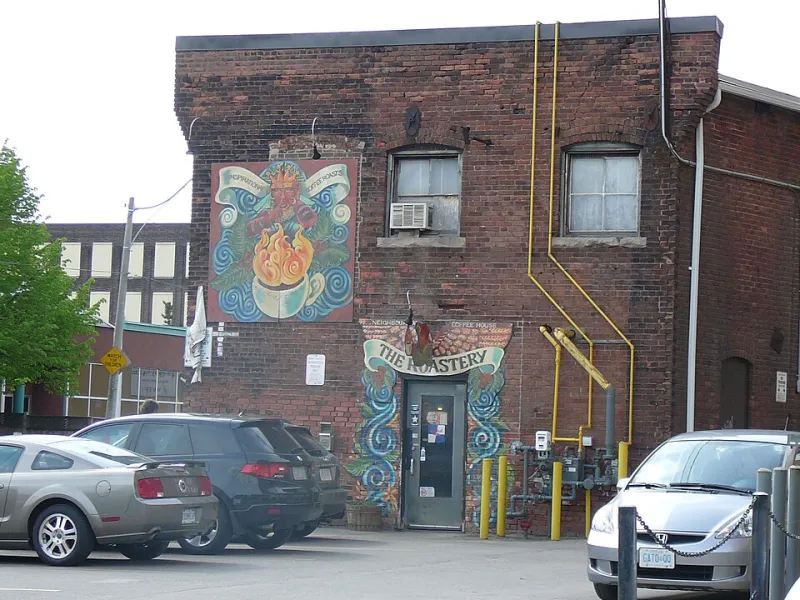
Photo: Steve Harris from Toronto, Canada, CC BY-SA 2.0, via Wikimedia Commons
Walk through almost any British town centre in 2026 and you will notice a subtle change in the shopfronts. The old card shop may now smell of roasting coffee. The former estate agent could be home to a small-batch brewery. A unit that once sold phone cases might have a 3D printer humming in the window, making parts for local designers. The high street is not exactly coming back to life in the way regeneration consultants promised. It is changing use.
This is the shopfront factory: a small manufacturer, maker or food producer taking space that was built for retail and turning it into production. The model is not new—breweries and bakeries have sold from the front for centuries—but it is spreading into unlikely categories. Lower rents, shorter leases and a customer base hungry for visible making are making the economics stack up in places where traditional retail no longer does.
The rent equation has flipped
For years, the high street was priced around footfall. A prime unit cost more because more people walked past the door. That logic still applies in the best locations, but plenty of secondary and tertiary high streets have seen rents fall far enough that a small producer can afford space that would once have been out of reach.
A coffee roastery needs ventilation, storage and a bit of floor space. It does not need a glass frontage in the traditional sense—but if the frontage is cheap, it becomes a bonus rather than a burden. The same goes for a textile studio, a small furniture maker or a digital fabrication workshop. They are not paying for retail theatre alone. They are paying for light, access and a location that customers can find.
Landlords, meanwhile, have grown more flexible. An empty unit costs money in service charges, insurance and void rates. A shorter lease to a local maker may be less glamorous than a national chain, but it keeps the lights on. In some towns, councils and property owners have also become more willing to discuss change of use, temporary permissions and meanwhile agreements. The paperwork is rarely fun, but it is often the difference between a vacant shop and a working one.
Why customers like seeing the mess
The appeal is not just economic. There is a real appetite for provenance. Customers want to know where their coffee was roasted, how their beer was brewed, who made the fabric or how the 3D-printed part was designed. A shopfront factory makes that story visible without turning it into a slick marketing exercise.
It also gives small producers a direct sales channel. A roastery can sell bags at the till and supply local cafés. A brewery can run taproom hours and sell casks to nearby pubs. A maker can take commissions from passers-by and test new products with real customers. The feedback loop is short and useful. You learn quickly whether a product is interesting or merely Instagram-friendly.
There is a risk of romanticising this. Not every customer wants to watch a production process, and not every maker wants the public wandering in. But the best versions of this model treat the shopfront as a threshold rather than a stage. People can see enough to understand the work, then buy something or book a workshop. The making remains the point.
The supply chain is local again
Small-batch production has become more viable partly because local supply chains have thickened. UK coffee roasters can buy green beans through specialist importers and collaborate with nearby cafés. Brewers can source malt and hops from regional suppliers. Textile studios can work with local dye houses and finishers. Digital fabrication has made it easier for designers to produce short runs without committing to overseas tooling.
That does not mean everything is locally sourced. It rarely is. But the shopfront factory often sits in a denser network of small suppliers, couriers and customers than a pure ecommerce operation. Being on a high street can reduce delivery friction for local B2B customers and make the business more visible to the people who might recommend it.
For niche British businesses, that matters. A small manufacturer selling online competes with the world. A small manufacturer with a visible workshop and a local trade counter competes on relationship, speed and trust. The high street gives it a physical address that customers can visit, which is still a powerful signal for a certain kind of buyer.
The awkward bits nobody Instagrams
The model has operational headaches. Food production brings extraction, odour, waste and hygiene requirements. Brewing brings water, drainage and noise. 3D printing can mean fumes, vibration and electrical load. Textile work can be dusty. Insurance can be fiddly. Landlords may not understand what a business actually does until they smell it.
Planning is another hurdle. A retail unit is not automatically suitable for manufacturing, even small-scale manufacturing. Use classes, change-of-use rules, listed-building consent and lease restrictions all matter. So do deliveries, bin storage and accessibility. A shopfront factory that blocks the pavement with sacks of coffee or pallets of malt will quickly lose goodwill.
Then there is the footfall question. A high street location is only an advantage if people come. Some towns have enough passing trade and local loyalty to support visible making. Others do not. In weaker locations, the shopfront is a cost rather than a channel, and the business may be better off in a small industrial unit with a good online presence.
What it means for town centres
The shopfront factory is not a silver bullet for town-centre regeneration. It will not fill every empty unit, and it will not replace the jobs or rates revenue of a large employer. But it offers something more useful than another charity shop or another vape store: a reason for people to visit, a reason for local suppliers to exist and a reason for a building to be maintained.
It also changes the conversation about what a high street is for. The old model was almost entirely about buying things. The new model is more mixed: buying, making, learning, repairing and meeting. That mix can be messy, and it requires councils, landlords and business owners to be pragmatic rather than precious about what a high street should look like.
The next wave of niche British businesses may not arrive with a grand regeneration plan. It may arrive with a lease on a former shop, a second-hand roaster and a sign that says open. The high street is becoming a factory floor—not everywhere, and not without friction, but often enough to matter.