The Lathe Has a Camera Now: Why Britain’s Small Makers Are Selling by Showing Their Work
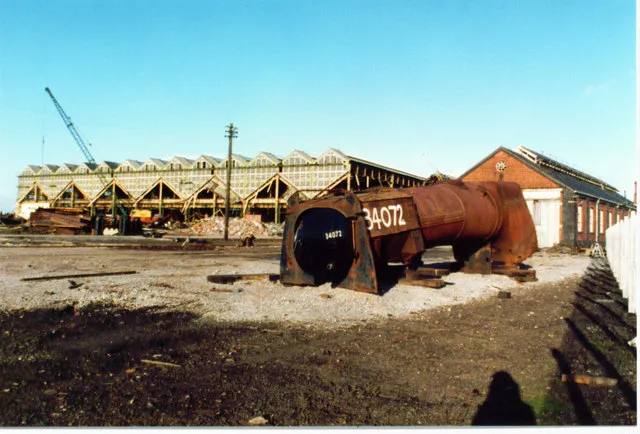
Photo: Brian Robert Marshall, CC BY-SA 2.0, via Wikimedia Commons
Somewhere off a ring road in the Midlands, a small precision engineering firm is filming a CNC changeover. There is no studio lighting. The camera is a phone on a magnetic mount. The presenter is the person who normally sets the tools. And the audience is a handful of engineers in Germany, Australia and Lancashire who need to know whether this supplier can hold a tricky tolerance on a batch of 40 parts.
A few years ago, that scene would have looked like a waste of shopfloor time. Today it looks like commercial infrastructure. Britain’s small manufacturers have discovered that the most credible marketing asset they own is not a brand film or a glossy brochure. It is the work itself, explained by the people who do it.
The anti-showreel
Most industrial marketing still tries to look bigger than the business actually is. Stock footage of sparks. A voiceover about ‘solutions’. A website that says ‘quality’ six times without showing a single inspection report.
Shopfloor video goes the other way. It is deliberately unglamorous. You see the swarf, the fixtures, the worn tap handles, the calibration certificate taped to the wall. You hear the extractor fan. For a buyer sourcing a specialist component, that is not a production flaw. It is proof.
A procurement manager does not need to be entertained. They need to reduce risk. Can this firm handle the material? Do they understand the failure mode? Will they flag a problem before the delivery date? A five-minute clip of an engineer talking through a setup can answer those questions faster than three email exchanges and a reference call.
Trust gets built in the boring bits
The best of these videos are not teardowns of competitors or trendy explainers. They are working documents. A toolmaker walks through a mould repair. A fabricator explains why a weld failed and what changed. A small food-equipment maker shows how the washdown design actually works after a shift.
The technical detail is the point. Buyers in niche industrial markets are not searching for inspiration. They are searching for evidence. A video titled ‘How we machine a 0.05 mm tolerance in 316 stainless’ will not go viral. It does not need to. It needs to reach the 300 people worldwide who care.
That is the quiet shift. Sales cycles shorten when the buyer has already seen the process. Objections get handled before the first call. The founder stops repeating the same explanation on every enquiry. The shopfloor becomes a pre-sales department without anyone calling it that.
Why small firms can do this well
Large manufacturers often struggle with this kind of content because it is too specific. Their marketing teams want broad messages. Their legal teams want less detail. Their shopfloor managers want fewer cameras.
Smaller firms have an advantage: the expert is in the room. The managing director may also be the person who quotes the job. The quality manager may be the person who films the inspection. That proximity makes the content believable in a way that an agency-produced video rarely is.
There is also a long-tail effect. A specialist component maker may have 2,000 subscribers, but those subscribers include distributors, design engineers and maintenance managers. The numbers look modest. The commercial value does not.
The leadership lesson: operations is the asset
The mistake would be to treat this as a marketing trend. It is closer to an operating decision. If a firm’s expertise is its edge, then showing that expertise is not vanity. It is how the market finds out.
That does not mean every managing director should buy a ring light. It means leadership teams should ask a more useful question: what do customers repeatedly need to understand before they trust us? Then film the answer, once, properly, and keep it somewhere useful.
A sensible approach is unglamorous. Pick ten questions that come up in every sales conversation. Film short answers. Keep the raw, specific detail. Add captions because plenty of people watch with the sound off. Chapter the longer videos. Put them where buyers already look. Treat the library as documentation, not content.
There are boundaries. Do not show customer drawings. Do not reveal a process that is genuinely proprietary. Get consent from the people on camera. Make safety gear non-negotiable. And resist the urge to over-edit. A slightly awkward pause is fine. A fake workshop is not.
What to avoid
The fastest way to ruin this is to let marketing flatten the technical nuance. Engineers can smell a scripted ‘passion for precision’ line from a mile away. The better videos sound like a colleague explaining something at the end of a shift: direct, specific, occasionally impatient with the obvious.
It also helps to show the limits. A firm that says ‘we scrapped this batch because the surface finish was inconsistent’ is more credible than one that only shows perfect parts. Buyers know manufacturing involves friction. Pretending otherwise makes them suspicious.
At Akkail, we keep coming back to the same point about niche businesses: the advantage is usually hiding in plain sight. For small manufacturers, it has been sitting on the shopfloor all along. The lathe has a camera now. The firms making it work are not chasing fame. They are shortening the distance between a buyer’s question and a credible answer.